
This is a question commonly asked when it comes to stubborn weight loss. For some women they feel that despite what they do in an attempt to lose weight, it doesn’t work.
They may be comparing themselves to friends and wonder why they are finding it so difficult. Then they may begin to look for other reasons as to why and wonder if it is their thyroid.
Or you may have been diagnosed with an underactive thyroid and feel that managing your weight is now going to be impossible. If this is you, read on!
Firstly, more about your thyroid…
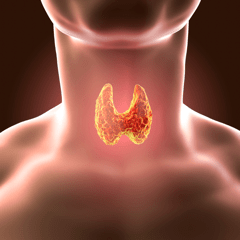
The thyroid is a gland that secretes hormones and plays a major role in the regulation of your metabolism which is how efficiently your body burns food for energy.
Hypothyroidism is an increasingly prevalent disease. This is where your thyroid gland is underactive and fails to produce enough hormones. This will result in your metabolism slowing which is why weight gain can be a symptom.
Hypothyroidism is 7 times more common in women than in men.
Up to 20% of the UK population could be suffering from some degree of hypothyroidism, however many cases could be undiagnosed.
Symptoms of hypothyroidism (an underactive thyroid) include;
- Weight gain
- Fatigue
- Depression
- Anxiety
- Poor memory
- Poor concentration
- Sensitivity to cold
- Dry skin and hair
- Thinning hair
- Brittle hair and nails
- Muscle aches
- Constipation
- Irregular menstrual cycle
Diagnosis of hypothyroidism
If you are concerned about symptoms that you may be experiencing your GP would commonly test for thyroid stimulating hormone (TSH) and thyroxine (T4) levels. If results indicate clinical hypothyroidism, levothyroxine hormone replacement tablets may be prescribed.
One of the most common causes of hypothyroidism is Hashimoto’s thyroiditis, which is an autoimmune condition. This may also be tested for by your GP if there is a reason to believe this could be a cause.
How Nutritional Therapy can support Hypothyroidism
Nutritional therapists work with people who may already have a diagnosis of hypothyroidism or wish to find out more about their thyroid function or whether their hypothyroidism is an autoimmune condition.
Private testing can also be undertaken with a Nutritional therapist for a more comprehensive overview regarding thyroid function. Vitamins and minerals pertinent to optimal thyroid function can also be included as part of this testing.
If hypothyroidism is not detected, testing for vitamin and mineral status is still beneficial as results may identify a deficiency which could be contributing to symptoms that an individual may be experiencing.
Nutritional and Lifestyle considerations
- Nutritional support and consideration of nutrient status
- Optimisation of gut and liver health
- Reducing inflammation
- Possible elimination of certain foods, e.g. gluten and lectins
- Toxic exposure
- Blood sugar balance
- Stress management
- Exercise
- Sleep
- Targeted supplementation (under the supervision of a Nutritional Therapist)
As a Nutritional therapist I take a personalised approach that considers you as an individual, taking into consideration your health history, test results, existing medical conditions, current symptoms, food preferences and your lifestyle. This enables bespoke plans to be created.
To find out more please book in for a FREE discovery call, I’d love to have a chat about it.
 lynsayfishernutrition.com